How many bags of concrete for a fence post?
Size the hole from the post, take the post's own volume out of it, add a margin and divide by the yield printed on the bag. A table for the common post and hole sizes, and the arithmetic behind it.
Last reviewed · Written and maintained by the MaterialBuyCalc editorial team
Short answer
A 4×4 post in a 10-inch hole 32 inches deep takes about 1.4 cubic feet of concrete with a 10% margin: three 80 lb bags or four 60 lb bags, at the yields QUIKRETE prints for its Concrete Mix. A 6×6 post in a 16-inch hole 40 inches deep takes about 4.5 cubic feet, which is eight 80 lb bags. The yield printed on your own bag decides the count, so check it before you buy.
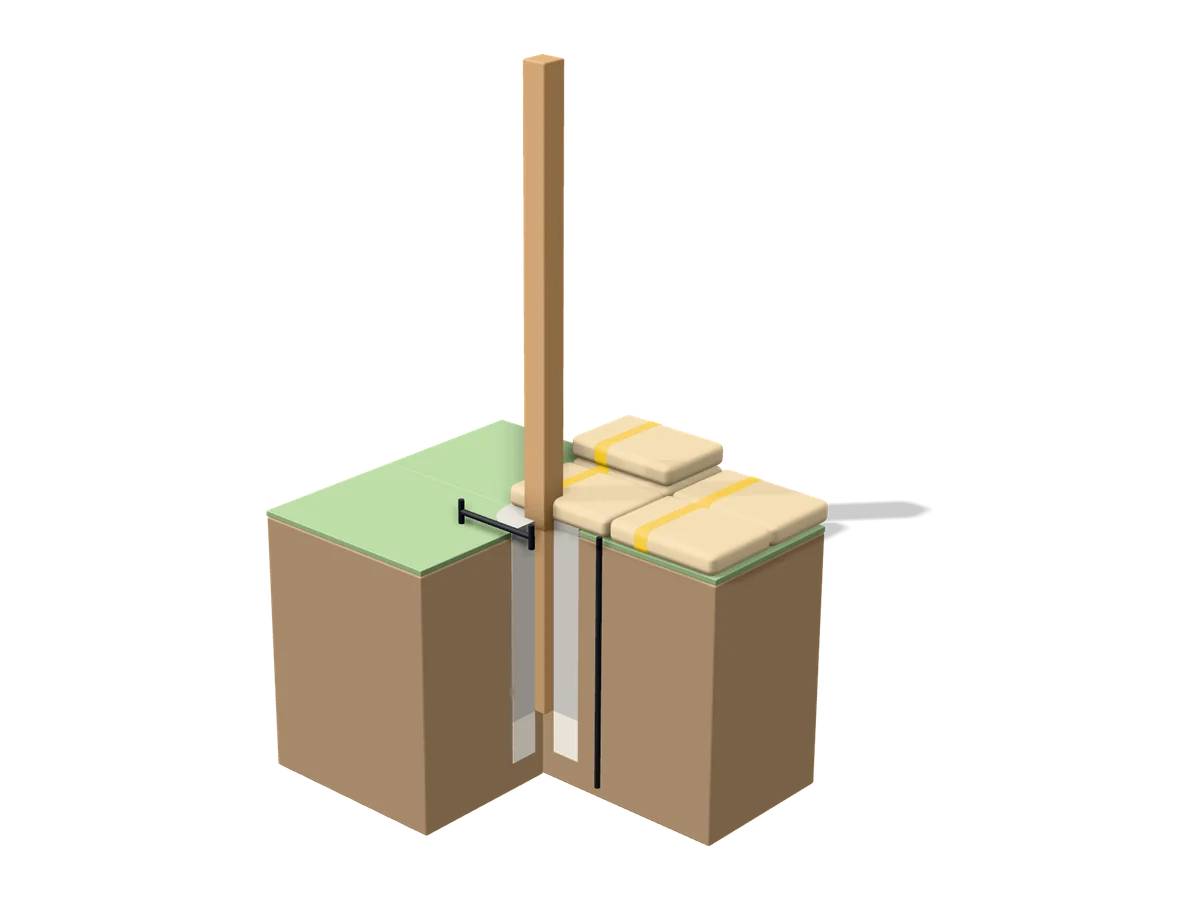
Size the hole from the post
QUIKRETE's data sheet for its Concrete Mix gives a simple rule for fence posts: dig the hole about three times as wide as the post, and about one third of the post's overall length deep. A 4×4 is 3.5 inches across once planed, so its hole is around 10 or 11 inches wide. A 10-inch or 12-inch auger is what most people end up using.
For depth, an 8 ft post goes 32 inches into the ground and leaves 5 ft 4 in standing. A 10 ft post goes about 40 inches down. Two things can push that deeper. In a cold climate the bottom of the footing has to sit below the frost line, and gate and corner posts carry more load than line posts. Where a fence is load-bearing or regulated, the data sheet itself defers to local building codes, and so should you.
Work out the volume, then take the post out of it
A round hole is a cylinder: π × radius² × depth. For a 10-inch hole 32 inches deep that is 3.1416 × 5² × 32 = 2,513 cubic inches. The post fills part of that space. The method on the bag starts with 6 inches of dry mix in the bottom, so the post stands in the top 26 inches. A 3.5 × 3.5 in post displaces 12.25 × 26 = 318.5 cubic inches.
That leaves 2,195 cubic inches of concrete, or 1.27 cubic feet (there are 1,728 cubic inches in a cubic foot). Add 10% and it comes to 1.40 cubic feet. At 0.60 cubic feet per 80 lb bag that is 2.33 bags, and since nobody sells a third of a bag, the answer is 3. The table below runs the same sum, with the same calculator this site uses, for the sizes people dig most often.
| Post and hole | Concrete | 80 lb bags | 60 lb bags | 50 lb bags | 40 lb bags |
|---|---|---|---|---|---|
| Post 3.5 in × 3.5 in, 8 ft long; hole Ø 10 in, 32 in deep | 1.4 ft³ | 3 | 4 | 4 | 5 |
| Post 3.5 in × 3.5 in, 8 ft long; hole Ø 12 in, 32 in deep | 2.1 ft³ | 4 | 5 | 6 | 8 |
| Post 3.5 in × 3.5 in, 10 ft long; hole Ø 10 in, 40 in deep | 1.73 ft³ | 3 | 4 | 5 | 6 |
| Post 5.5 in × 5.5 in, 10 ft long; hole Ø 16 in, 40 in deep | 4.46 ft³ | 8 | 10 | 12 | 15 |
The bag's weight is not the answer, its yield is
Concrete is bought by weight and used by volume, and the bag tells you the conversion. QUIKRETE's Concrete Mix data sheet lists about 0.30 cubic feet for a 40 lb bag, 0.375 for 50 lb, 0.45 for 60 lb, 0.60 for 80 lb and 0.675 for 90 lb. Those are the yields used in the table above.
Other products differ. Fast-setting post mixes, high-strength mixes and other brands print their own figures, and a lighter mix can yield more per pound. Read the yield on the bag you are actually going to buy and use that number. The concrete bag calculator asks for it for exactly this reason.
Why the table adds 10%
A hole dug by hand or by auger is never a clean cylinder. Augers wander, the sides crumble while you work, and the bottom often bells out wider than the top. Some concrete also stays in the barrow and on the shovel.
Running out halfway up a post means a second trip while the first batch starts to stiffen. A spare bag costs little and keeps for months if it stays dry. The 10% margin is a planning allowance, not a rule: in firm clay with a clean auger hole you may need less, and in sandy or stony ground more.
A whole fence: multiply, then think again
Multiply the bags for one post by the number of posts. A 100 ft run of panel fence with posts every 8 ft needs 14 posts (the fence calculator does that count, including the extra end post). At three 80 lb bags each that is 42 bags, about 3,400 lb to lift, carry and mix.
At that size it is worth pricing the alternatives before you start: renting a small mixer, or asking a local supplier about a short load of ready-mix if the posts are close together. Work out the total first, then decide; the concrete calculator gives the same total in cubic yards if a supplier asks for it that way.
Setting the post, as the data sheet describes
The method printed in the data sheet is short. Put 6 inches of dry mix in the bottom of the hole. Stand the post on it and check that it is level and plumb. Mix the concrete with water before it goes in, then fill around the post. When the standing water has gone, smooth the top and slope it away from the post so rain runs off rather than pooling against the wood. Wait 24 hours before the post takes any strain, such as rails, panels or a gate.
Common questions
- Can I pour the mix in dry and add water on top?
- The cited data sheet mixes the concrete with water before it goes into the hole; only the 6-inch base layer goes in dry. Some products are made to be set dry, and their bags say so. Follow the instructions on the product you buy.
- How long before I can hang the rails or the gate?
- The data sheet says to wait 24 hours before the post is subjected to any strain. Concrete keeps gaining strength for weeks after that, so heavy gates are better hung later rather than sooner.
- Should I really subtract the post?
- Yes. A 4×4 standing 26 inches deep takes up about 13% of a 10-inch hole that is 32 inches deep. Leave it in and you buy roughly one bag in eight that you will not use.
- What if the hole comes out wider than planned?
- Volume grows with the square of the diameter, so small changes matter. A 12-inch hole holds 44% more than a 10-inch one of the same depth: for an 8 ft 4×4 that is four 80 lb bags instead of three.
Sources
- QUIKRETE: QUIKRETE Concrete Mix, Product No. 1101 (product data sheet)Checked on November 25, 2026
- Sika (Chile): Presec H02 Homecrete, Hoja de Datos del Producto, julio 2026, versión 01.03Checked on November 25, 2026